New law brings farmland assessment changes
By HANNAH SPANGLER
FarmWeek
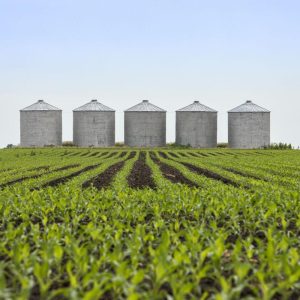
Farmland values could level off and eventually decline under changes to the state’s Farmland Assessment Act included in the budget package signed June 16 by Gov. JB Pritzker. Public Act 104-0468 extends the vegetative filter strip assessment, adjusts the income capitalization rate and makes other technical updates to the Farmland Assessment Act. Originally introduced and supported by Illinois Farm Bureau as SB4202, sponsored by Sen. Mark Walker, D-Arlington Heights, and HB5773, sponsored by Rep. Larry Walsh Jr., D-Joliet, the legislative provisions were passed by the General Assembly at the end of the spring legislative session in SB3019.
The changes reflect a collaborative effort by the Farmland Assessment Technical Advisory Board (FATAB), which includes the College of Agricultural, Consumer and Environmental Sciences at the University of Illinois, the Chief County Assessment Officers Association, and the Department of Revenue.
“We appreciate the Illinois General Assembly, the legislative sponsors, and the governor in putting this into law to keep the Farmland Assessment Act and the formula used to calculate the income-earning potential of farmland technically correct and working as it was originally envisioned,” said IFB Director of Local Government Programs Brenda Matherly.
Technical changes
Unlike residential, commercial or industrial property, Illinois farmland is assessed based on its income-earning potential, Matherly explained. That potential is calculated using a statewide formula that incorporates commodity prices, input costs and a capitalization rate, a factor in the formula that converts a farm’s income potential into an assessed value for tax purposes, tied to long-term farm mortgage interest rates.
This year, IFB set a state and local government priority to adjust how that formula impacts the taxable value of farmland. “The changes included in this legislation did just that,” Matherly told FarmWeek. The new law places guardrails around the capitalization rate by requiring three percentage points to be added to the published rate. If the adjusted rate falls below 8%, it will default to 8%. If it exceeds 10%, it will be capped at 10%. “The formula is a very complex calculation and is monitored and reviewed by FATAB and the Illinois Department of Revenue,” Matherly said.
“If this new application had been administered for the most recently released farmland assessments, the capitalization rate that was applied would have been 8.8% instead of 5.8%,” Matherly shared as an example. “By adding three percentage points to the 5.8% rate that was used in the formula under the current application, the effective rate would have been 8.8%, falling well within the new statutorily required capitalization rate range.”
Benefits to farmers, others
In recent years, historically low capitalization rates have pushed farmland assessed values higher. Matherly said a higher rate will level out values and, in some cases, even lower them. The act is also expected to bring more consistency to year-to-year assessment changes, which could benefit both farmland owners and local taxing districts. Additionally, the legislation extends the classification and assessment of vegetative filter strips by moving the sunset date from December 31 of this year to 2031.
Timeline for impact
“While this is good news for Illinois farmers, it is important to note that the changes made in this law will not be immediately seen in the annual assessed value of farmland,” Matherly said.
The state is still working through a 2013 legislative change that requires assessed values to be moderated by a limited factor, preventing farmland values from changing too much in a single year. That factor has driven steady increases in farmland values and is expected to continue influencing taxable values in the next one to two years. However, Matherly said the newly applied capitalization rate will likely accelerate how quickly that limit is reached.
“This will allow values to revert to an assessment driven by data used in the income capitalization formula and keeps with the goal that the process accurately reflects real economic drivers,” she said.
This story was distributed through a cooperative project between Illinois Farm Bureau and the Illinois Press Association. For more food and farming news, visit FarmWeekNow.com.